
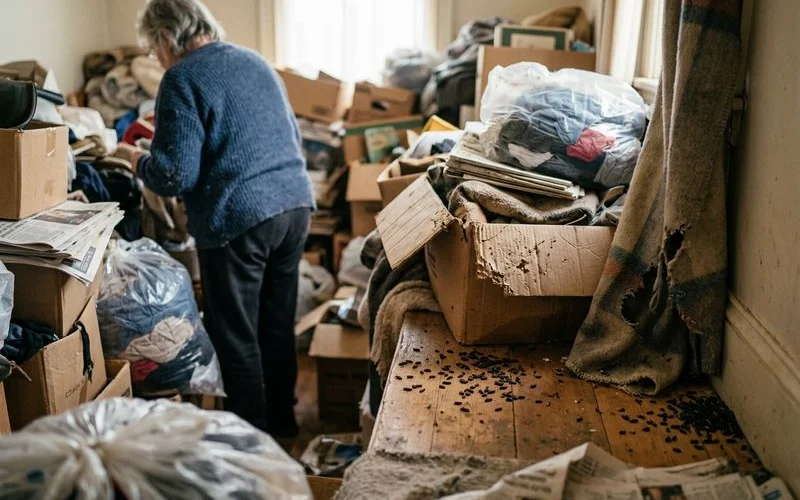
Dealing with pest infestations in hoarding homes in the Lowcountry requires a deep understanding of local insects. Our experience in South Carolina proves that seasonal pest activity is just part of coastal living. Palmetto bugs seek shelter during summer storms, while mice look for winter warmth.
Most people handle these common intruders with routine maintenance.
In properties struggling with chronic disorganization, this dynamic shifts dramatically. We consistently see how an occasional pest sighting quickly turns into a deeply established colony.
The International OCD Foundation uses the Clutter Image Rating (CIR) scale to measure this. Once a home reaches a Level III on this scale, the environment provides enough undisturbed space to support permanent habitats.
The sheer volume of accessible food and shelter transforms the space completely. Our technicians regularly help families in Summerville, Charleston, and Goose Creek tackle these visceral challenges.
The health risks are severe, especially considering the secondary contamination left behind. Let’s look at the specific data driving these infestations and explore practical ways to restore safety to your home.
Why Hoarding Creates Ideal Pest Habitats
To understand the severity of these infestations, you have to look at the environment from the pest’s perspective. Every insect and rodent is searching for reliable food, accessible water, and safe shelter. Our South Carolina climate already provides a humid subtropical playground for these creatures. A heavily cluttered home simply takes those ideal outdoor conditions and brings them inside.
Food in Abundance
Properties with significant accumulation almost always contain endless food sources. We find that pests do not just rely on expired pantry items or accessible pet kibble. They will eat almost anything organic.
Common unconventional food sources include:
- Cardboard boxes and binding glue
- Stored paper products and newspaper
- Fabric blends and loose textiles
- Decorative candle wax
- Bar soap left in humid bathrooms
Mice are remarkably resourceful in these environments. A single rat can easily consume up to a third of its body weight every single day. Our cleanup crews frequently uncover empty snack wrappers and food waste distributed far beyond the kitchen.
Water Accessibility
The moisture conditions in these environments provide life-saving water sources for pests. Condensation on blocked windows and hidden plumbing leaks create perfect drinking pools. We also see significant moisture generated simply by decomposing organic material trapped under heavy piles.
In the Charleston area, the natural climate compounds this issue. South Carolina summer humidity averages around 70 percent, which pests absolutely love. Our assessments often reveal that poor ventilation in a packed room traps this humid air indoors. Even without an active pipe leak, this ambient condensation provides enough daily moisture for a roach colony to thrive.
Shelter Without Disturbance
This lack of disturbance is arguably the biggest catalyst for extreme population growth. In a standard home, weekly vacuuming and cleaning disrupt nesting cycles. We know that insects and rodents will quickly abandon a habitat if they feel constantly threatened.
In a heavily cluttered space, vast areas remain completely untouched for years. The dark, warm gaps between stacked boxes or folded clothing provide perfect protection from predators. Our teams frequently find nests burrowed deep inside porous materials like cardboard, which actively absorb and hold the pest’s breeding pheromones.
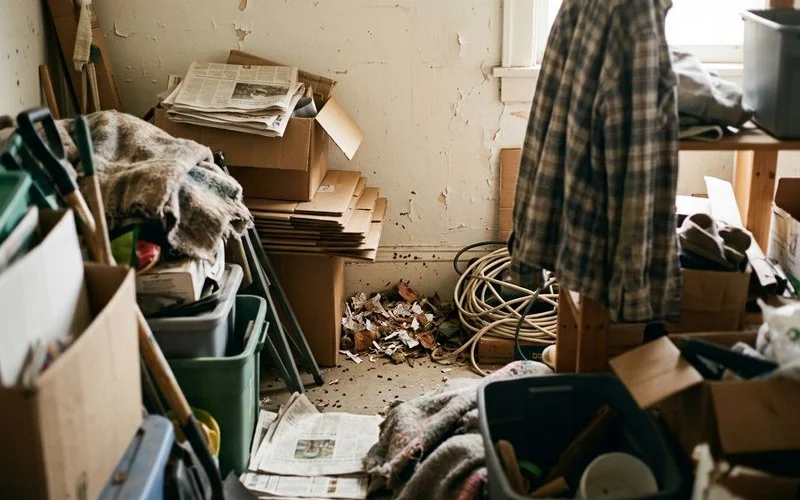
These protected zones allow populations to grow completely unchecked. The results are numbers that would be physically impossible in a regularly maintained property.
Common Pests in Lowcountry Hoarding Homes
The warm, coastal climate of the Charleston and Summerville area supports a massive variety of pest species. We routinely see properties suffering from multiple, overlapping infestations at the exact same time.
German Cockroaches
German cockroaches are the single most prolific pest found in these local environments. Unlike the larger outdoor species, German roaches are exclusively indoor insects that rely on human structures to survive. Our local pest control partners confirm that they breed faster than any other common species.
The reproductive math is staggering. A single female produces an egg case (called an ootheca) containing 30 to 40 eggs. We have seen populations explode because these eggs hatch in just 20 to 30 days. Under optimal conditions of 75 degrees and 70 percent humidity, one female and her offspring can produce up to 300,000 roaches in a single year.
The health implications are severe and scientifically documented. The South Carolina Department of Public Health (DHEC) lists cockroach allergens as a primary trigger for asthma attacks. Our cleanup protocols must account for their waste products, which contaminate surfaces and become dangerous airborne dust when disturbed.
Rodents
Mice and rats represent another massive challenge in South Carolina properties. The common house mouse is ubiquitous, but the coastal environment brings specific rat species into the mix. We have to treat each rodent type differently based on their unique behaviors.
| Rodent Species | Common Nesting Areas | Behavior in Cluttered Homes |
|---|---|---|
| Roof Rats (Black Rats) | Attics, upper cabinets, climbing vines | Excellent climbers that enter through upper gaps and travel up to 300 feet for food. |
| Norway Rats (Brown Rats) | Crawlspaces, basements, lower walls | Stay low to the ground and chew through subflooring or baseboards to access food. |
| House Mice | Inside furniture, between stacked boxes | Can squeeze through quarter-inch gaps and nest directly inside accumulated clothing. |
Rodent infestations carry significant disease risks. Leptospirosis, salmonella, and rat-bite fever are all present in local populations. Our hazard assessments also focus on the physical damage they cause. They constantly gnaw on electrical wiring, which creates a very real fire hazard hidden behind piles of belongings. Perhaps worst of all, their urine permanently saturates porous structural materials over time.
Palmetto Bugs and American Cockroaches
These larger cockroach species primarily live outdoors in the Lowcountry. Heavy summer rains often drive them indoors seeking higher ground. We find that heavily cluttered homes offer the exact dark, damp conditions they need to establish a permanent indoor colony. They produce about 16 eggs per cycle and thrive in moisture-heavy rooms like blocked bathrooms.
Bed Bugs
Bed bugs occasionally invade these properties, especially where clothing piles up near sleeping areas. The sheer volume of items provides limitless hiding spaces, making standard treatments nearly impossible. Our experience shows that eco-friendly thermal treatments (heating a room to 130 degrees) often fail here. The heat simply cannot penetrate deep enough into dense, packed piles of belongings to kill the eggs.
Fleas and Ticks
Homes with indoor pets face severe flea and tick challenges. The accumulation of items blocks access to the floorboards where these parasites lay their eggs. We know that flea pupae are highly resistant to standard bug sprays. If you cannot physically clear the floor to vacuum and treat the area, the breeding cycle will never stop.
Health and Safety Risks of Pest Infestations
The dangers associated with these pests go well beyond simple property damage. The Institute of Inspection, Cleaning and Restoration Certification (IICRC) classifies severe hoarding (Level 4 or 5) as a biohazard situation specifically because of pest waste.
- Airborne allergens and asthma triggers: Cockroach saliva, rodent dander, and dried waste become part of the household dust. Our teams wear specialized respirators because simply moving a box can send these concentrated allergens airborne.
- Surface contamination: Pests track bacteria like E. coli and salmonella across every exposed surface. In severe cases, the contamination covers kitchen counters, beds, and living room furniture.
- Structural damage: Termites and carpenter ants thrive in the moist microclimates created by blocked walls. We frequently uncover compromised floor joists and ruined insulation during the clearing process.
- Psychological impact: Living alongside thousands of insects creates intense, chronic stress. This embarrassment often prevents people from seeking help, which just allows the infestation to multiply further.
Why Standard Pest Control Fails in Hoarding Homes
Conventional pest control services work beautifully in typical residential environments. A technician can easily walk the perimeter, spray the baseboards, and place bait stations in strategic corners. We rely on these standard methods for maintenance, but they are entirely ineffective in a deeply cluttered space.
The fundamental issue is physical access. The technician simply cannot reach the baseboards or wall voids where the pests actually live. Our colleagues in the pest control industry explain that standard pyrethroid sprays lose their effectiveness when applied to porous surfaces like dirty cardboard or fabric.
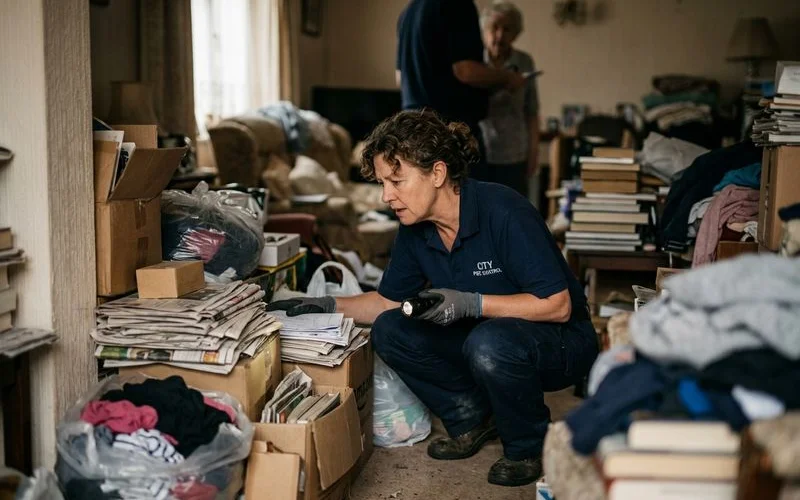
Furthermore, bait stations only work if the pests are hungry. If a rat has access to fifty open snack wrappers on the floor, it has zero incentive to eat a chemical bait block. We firmly believe that effective remediation requires an integrated approach. The physical barriers must be removed before the biological threat can be neutralized.
The Professional Approach to Dealing with Pest Infestations in Hoarding Homes in the Lowcountry
At Summerville Hoarding Cleanup, handling biohazardous pest contamination is a core part of the job. Our approach aligns with strict industry standards to ensure the safety of both the occupants and the cleanup crew.
Phase 1: Assessment and Planning
Before moving a single item, the team conducts a comprehensive hazard assessment. The crew uses this time to identify the specific pest species and the extent of the biohazard. Our technicians determine the necessary Personal Protective Equipment (PPE), which typically includes N95 or P100 respirators and full Tyvek suits.
For severe rodent issues, initial trapping and exclusion work happens first. Disturbing an active rat colony without preparation will simply scatter the animals into the walls or over to the neighbor’s house.
Phase 2: Coordinated Removal and Treatment
Item removal and pest treatment must happen at the exact same time. As the crew clears a section of the room, they immediately inspect and treat the newly exposed floorboards. Our Mass Contents Manipulation (MCM) strategy ensures that pests cannot just scurry to the other side of the room.
Items are carefully inspected for contamination during the sorting process. Anything saturated with rodent urine or completely infested with roach eggs goes straight into heavy-duty contractor bags. We seal these bags immediately to prevent cross-contamination as items travel through the house.
Phase 3: Decontamination
Once the bulk items are gone, the true deep cleaning begins. The team washes all hard surfaces using EPA-registered disinfectants designed to break down biological waste. Our protocol includes treating open wall voids with insect growth regulators (IGRs) or silica dust to kill any remaining hidden insects. The crew also completely removes and discards any porous structural materials, like drywall or subflooring, that cannot be sanitized.
Phase 4: Prevention
The final step is sealing the home so the pests cannot return. The crew identifies and repairs the physical entry points the animals used in the first place. We utilize heavy materials like galvanized steel mesh to close exterior gaps, as rats can easily chew through standard spray foam. Repairing torn window screens and fixing moisture leaks ensures the environment is no longer hospitable to future invaders.
When to Call for Help
If you suspect a massive pest population inside a deeply cluttered Charleston or Summerville property, professional assessment is your safest first step. Trying to tackle a biohazard of this scale without proper respiratory protection exposes you to severe respiratory infections and disease.
Our biohazard and hazard remediation services integrate thorough pest contamination protocols directly into the clearing process. The company coordinates with licensed pest management experts in the region to guarantee the infestation is eradicated safely.
Our goal is to eliminate the source of the problem while treating the home and the family with the utmost discretion and respect. Dealing with pest infestations in hoarding homes in the Lowcountry is challenging, but you do not have to do it alone.
Contact Summerville Hoarding Cleanup at (980) 829-0669 to schedule a confidential property evaluation.
Let us help you take that crucial first step toward a healthier, safer living space.


