
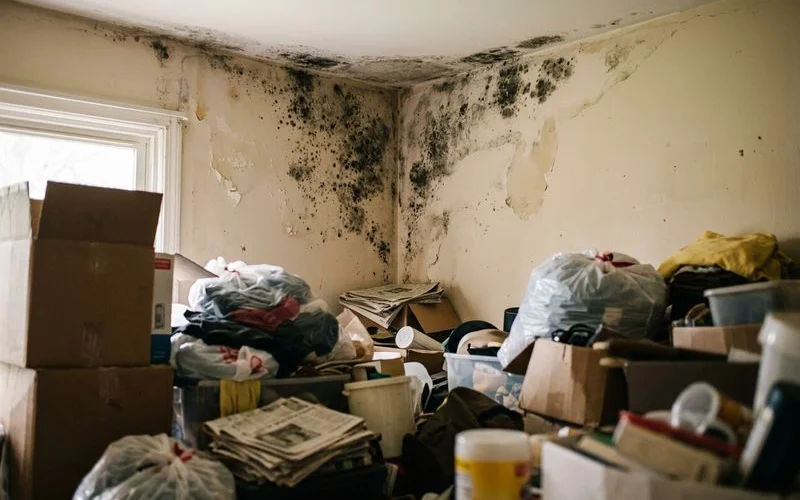
You know how quickly a small moisture problem escalates in a heavily cluttered space. If you are researching mold in hoarding homes: what you need to know first is that what looks like a simple clutter issue is often masking a massive biological hazard. Our biohazard cleanup team encounters this exact scenario constantly across the US.
The reality is that stacking items against walls blocks airflow and hides early warning signs of water damage.
Our goal is to break down the science of why this happens and explain the exact steps needed to resolve it safely. Data reveals exactly what is happening, and practical solutions exist to respond to this difficult situation.
Mold in Hoarding Homes: What You Need to Know About Growth Factors
To understand why mold dominates these spaces, you have to look at its basic survival needs. The requirements are simple: moisture, an organic food source, and a surface to grow on. Typical homes disrupt these elements through daily climate control and routine cleaning.
Hoarding environments completely dismantle every one of these natural defenses.
Moisture Accumulation
The Environmental Protection Agency (EPA) explicitly recommends keeping indoor relative humidity between 30 and 50 percent to prevent fungal growth. That is a difficult target in the South Carolina Lowcountry. Morning humidity frequently spikes above 85 percent during the summer months.
Normally, a home’s HVAC system manages this heavy moisture load. Our technicians frequently measure indoor humidity levels exceeding 80 percent in heavily hoarded Summerville properties. Blocked vents completely suffocate the air conditioning system, creating isolated, high-humidity microclimates in packed rooms.
Water leaks create an even more destructive moisture source. A slow drip under a bathroom sink can soak into subflooring for years if hidden by stacked boxes. The EPA notes that mold can begin growing within 24 to 48 hours of a water intrusion event.
Abundant Food Sources
Fungal colonies require organic material to feed on, and hoarded spaces offer an infinite supply. Cardboard boxes, old newspapers, cotton clothing, and leather goods are premium food sources. The items most commonly saved in these situations essentially act as an all-you-can-eat buffet for airborne spores.
We regularly see rapid mold proliferation in kitchens and bathrooms packed with paper goods. The concentrated moisture in these specific rooms accelerates the breakdown of organic matter. A stack of magazines in a humid bathroom can become completely encased in mold within just a few weeks.
Undisturbed Surfaces
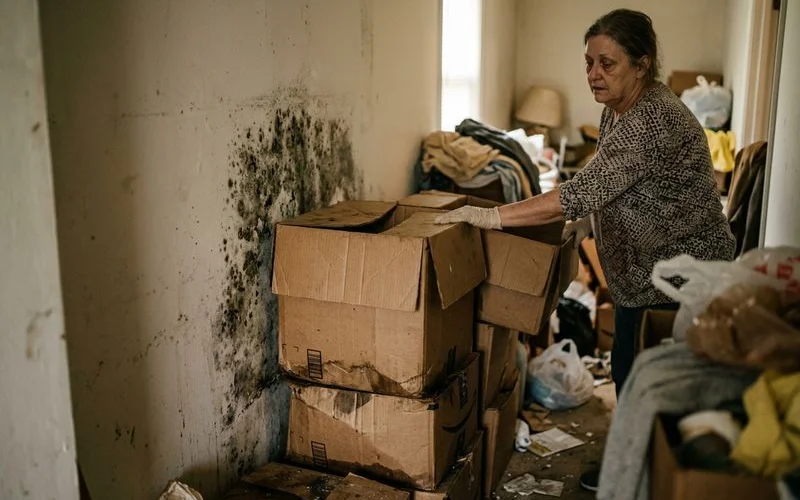
Time is the final ingredient mold needs to establish massive colonies. Stacks of belongings pushed against walls create dark, stagnant void spaces. These hidden pockets allow mold to reproduce entirely undisturbed for years.
Our typical remediation projects uncover vast networks of fungal growth that were completely invisible from the center of the room. This differs drastically from a standard home, where regular vacuuming and visual inspections interrupt early mold development.
Types of Mold Found in Hoarding Homes
Different fungal species carry distinct health risks and require specific removal strategies. The National Institute for Occupational Safety and Health notes that nearly 47 percent of US residential buildings show visible mold or detectable odors. In hoarding situations, these specific species are the most frequent offenders.
Aspergillus
Aspergillus is an incredibly common indoor mold genus that thrives in dusty, cluttered environments. It presents in a variety of colors, including green, yellow, brown, and white. Healthy adults typically tolerate mild exposure, but it poses a severe threat to anyone with a weakened immune system.
Our crews often find Aspergillus colonies coating old clothing and books. If inhaled in massive quantities, it can trigger a severe respiratory infection known as aspergillosis. This condition requires immediate medical intervention and aggressive antibiotic treatment.
Penicillium
Penicillium stands out due to its distinct blue or green powdery texture. It spreads aggressively on water-damaged materials, spoiled food items, and constantly damp surfaces. This species produces massive quantities of spores that easily become airborne when items are shifted.
Exposure to Penicillium rapidly triggers severe allergic reactions and respiratory distress. We prioritize extreme caution when disturbing items coated in this particular fungus to prevent spreading the easily detached spores.
Cladosporium
Unlike many species that require heat, Cladosporium grows effectively in both warm and cool conditions. This temperature flexibility makes it a relentless year-round threat in US homes. It frequently colonizes fabrics, window sills, and the interior of dirty HVAC systems.
Chronic exposure directly causes chronic skin irritation and persistent respiratory symptoms. Our inspection process always includes checking the air conditioning registers for Cladosporium buildup.
Stachybotrys Chartarum (Black Mold)
Stachybotrys chartarum generates massive public concern, and the fear is completely justified. Commonly referred to as black mold, it produces dangerous mycotoxins that trigger neurological symptoms and severe immune system suppression. This toxic species requires constant, steady moisture to survive.
We almost exclusively find black mold on drywall, ceiling tiles, and structural wood that has suffered chronic water damage. It looks like dark greenish-black patches and feels slimy when actively wet. Finding Stachybotrys chartarum immediately confirms a major, active plumbing or roofing failure that must be fixed.
Recognizing Mold in a Hoarding Environment
Spotting the problem early is difficult because the clutter literally hides the evidence. However, you can identify a massive contamination issue through specific environmental clues before you ever see a spot of green fuzz. Indoor air quality becomes a serious concern once spore counts exceed 10,000 per cubic meter.
Here are the undeniable warning signs of active indoor fungal growth:
- Persistent musty odor: Fungal colonies release volatile organic compounds (VOCs) that smell distinctly earthy and damp.
- Health symptom relief outdoors: If your chronic headaches or sinus pressure vanish when you leave the house, the indoor air is likely toxic.
- Visible structural water damage: Peeling paint, heavily warped baseboards, and brown ceiling stains guarantee moisture is trapped behind the walls.
- Window condensation: Constant water droplets on the inside of windows indicate the indoor humidity is far too high.
- Visible mold on items: Seeing actual green or black spots on cardboard boxes confirms the air is actively supporting reproduction.
Health Risks of Mold Exposure in Hoarding Situations
The medical consequences of fungal exposure escalate dramatically in heavily cluttered homes. Occupants face continuous, 24-hour exposure in tightly sealed microclimates. The Centers for Disease Control and Prevention (CDC) recently reported that approximately 4.6 million asthma cases in the US are directly attributable to dampness and mold exposure.
Short-Term and Long-Term Symptoms
Initial reactions often mimic aggressive seasonal allergies. Sneezing, itchy eyes, skin rashes, and a scratchy throat are the most frequent early complaints. These immediate symptoms indicate your immune system is fighting off airborne particulates.
Our clients frequently mistake these early warning signs for a stubborn cold. Long-term, continuous exposure leads to far more severe conditions like chronic sinusitis and hypersensitivity pneumonitis. This severe lung inflammation happens when you constantly inhale high concentrations of biological particles.
Vulnerable Populations at Extreme Risk
Certain individuals face life-threatening consequences from toxic indoor air. Young children, elderly adults, and anyone taking immunosuppressant medications cannot fight off these aggressive fungal spores. The CDC explicitly links damp indoor spaces to the worsening of pre-existing asthma.
We strongly advise families to relocate vulnerable relatives before any cleanup begins. Living inside a biologically contaminated hoarding environment constitutes a severe medical emergency for these high-risk groups. According to recent CDC data, roughly 21 percent of all asthma cases in the US are linked to dampness and mold.

Professional Mold Remediation in Hoarding Homes
Treating a heavily cluttered home requires specialized training that goes far beyond spraying bleach. The Institute of Inspection, Cleaning and Restoration Certification (IICRC) sets the S520 standard, which is the absolute gold standard for professional mold remediation. This rigid protocol treats massive fungal growth as a serious biological contamination.
Assessment and Testing
The process must begin with a comprehensive, data-driven assessment. Technicians map out trapped moisture using infrared thermal imaging cameras and digital moisture meters. This specialized equipment reveals exactly how far the water damage extends behind walls and under floors.
Our initial inspections in hoarded homes are often limited by massive piles of belongings. The true scope of the structural damage usually reveals itself slowly as we carefully extract the contaminated debris.
Containment Strategies
Failing to contain the workspace guarantees that toxic spores will contaminate the rest of the house. Professionals build tight physical barriers using heavy-duty polyethylene plastic sheeting. We then deploy industrial HEPA-filtered air scrubbers to establish negative air pressure inside the contaminated zone.
This vital step prevents microscopic particles from drifting into clean bedrooms or the kitchen. Setting up these barriers in a hoarded property takes extreme precision because the piles of items block standard doorways.
Removal and Decontamination
Porous materials soaked in contaminated water simply cannot be saved. Drywall, carpeting, fiberglass insulation, and upholstered furniture must be bagged and permanently discarded. Non-porous materials like glass and metal are aggressively scrubbed using commercial-grade antimicrobial treatments.
Our crews carefully evaluate every single hoarded item for fungal penetration. Throwing away cherished books and clothing is emotionally devastating for the homeowner. We handle this reality with deep compassion, but highly contaminated porous items pose a severe health risk and cannot stay.
Source Correction
Cleaning up the damage is useless if you do not fix the broken pipe. You must permanently repair the underlying plumbing leak, roof damage, or HVAC failure. The EPA warns that mold will return in just a few days if the moisture source remains active.
We constantly remind clients that moisture management is a permanent, daily requirement. Fixing the air conditioner and running fans is mandatory to prevent the devastating cycle from repeating.
Prevention After Remediation
Keeping the home safe requires strict adherence to daily humidity control. You must actively manage the indoor climate to prevent airborne spores from settling and germinating again.
Effective Moisture Control Tactics
Investing in a high-capacity, ENERGY STAR-rated dehumidifier is the best defense against high summer humidity. You need to keep the indoor relative humidity strictly below 50 percent. Use a cheap digital hygrometer from any hardware store to monitor the moisture levels in real-time.
Our standard advice is to run bathroom exhaust fans for at least 30 minutes after taking a shower. You must also dry up any spilled water or minor plumbing leaks within 24 to 48 hours to deny mold the water it needs to survive.
| Maintenance Action | Standard Home Practice | Post-Hoarding High-Risk Practice |
|---|---|---|
| Humidity Monitoring | Checking the thermostat occasionally. | Daily checks using a digital hygrometer. |
| Water Leaks | Fixing drips when convenient. | Immediate repair within 24 hours. |
| Airflow Management | Keeping most interior doors open. | Using standalone HEPA air purifiers daily. |
| Visual Inspections | Cleaning baseboards during spring cleaning. | Monthly checks under sinks and behind beds. |
Getting Help for Mold in a Hoarding Situation
Tackling a massive fungal contamination in a deeply cluttered house is extremely dangerous. Tearing out moldy drywall without commercial HEPA filtration will flood your lungs with millions of toxic spores. You need specialized gear and rigorous training to do this safely.
At Summerville Hoarding Cleanup, our biohazard and hazard remediation team is fully certified and equipped to handle these extreme environments.
We follow strict industry standards to systematically eliminate the biological threat while treating the homeowner with total respect.
If you are dealing with a severe hoarding and mold crisis in the US Lowcountry, contact us at (980) 829-0669 for a confidential assessment. Understanding mold in hoarding homes: what you need to know is just the beginning. Call us today so we can help you build a clear, actionable plan to restore the property.


